Along the Air Line... 2008 - Spring, Part 2 The Air Line Trail in Eastern Connecticut - Stan Malcolm Photos |
mHome Page Stan's FlickR Albums |
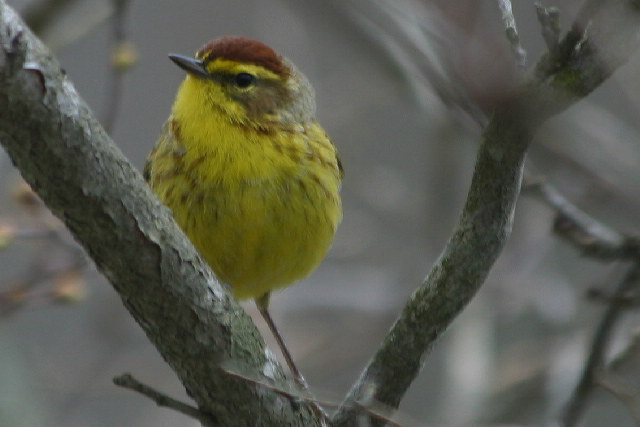
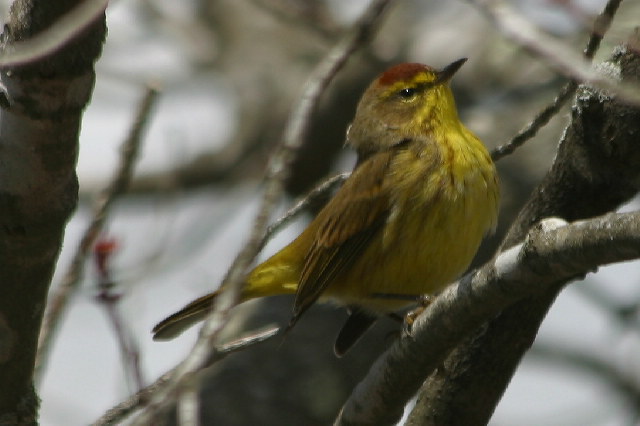
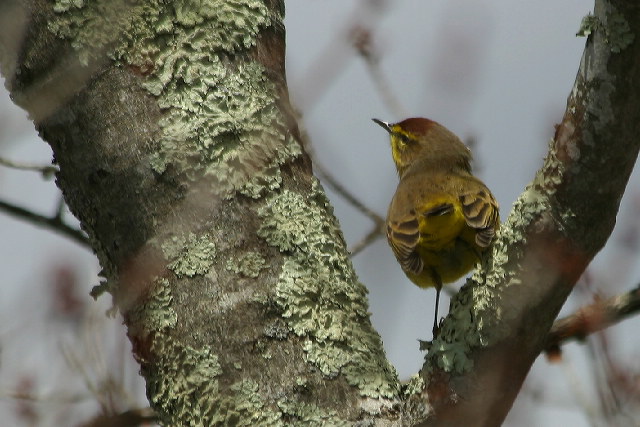
April 14th. Afternoon. Lots of Palm Warblers (Dendroica palmarum) in the marsh. |
|
|
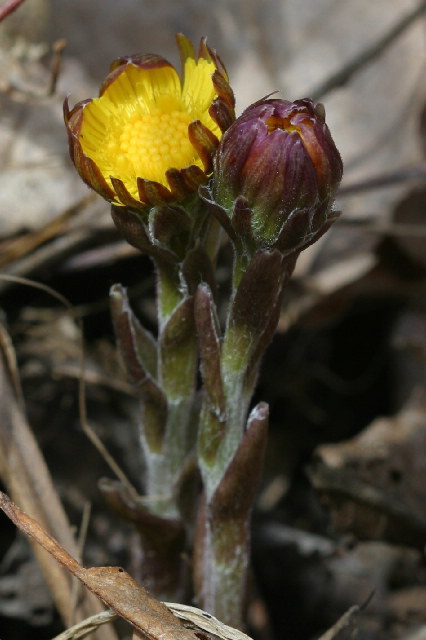
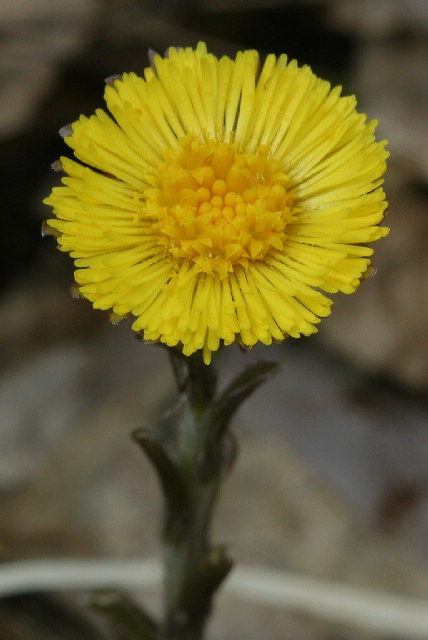
Coltsfoot (Tussilago farfara) first bloomed today. (I saw no sign of it as recently as yesterday.) The leaves will follow after the blooms have gone to seed. |
|
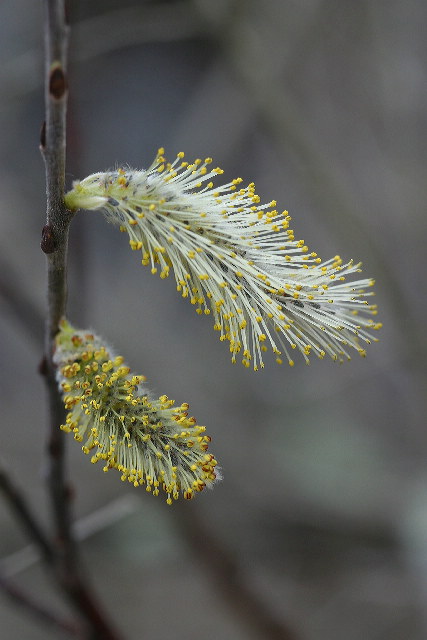
A few Pussy Willows (Salix discolor) were in flower. I'm surprised how few of these I've seen along the trail. |
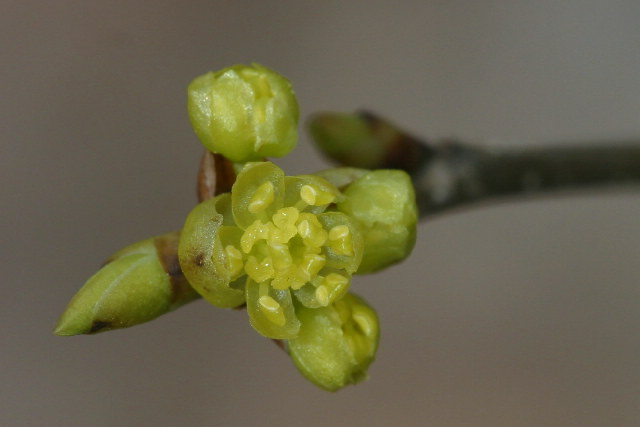
The minute blossoms of Spicebush (Lindera benzoin) are just starting to open. |
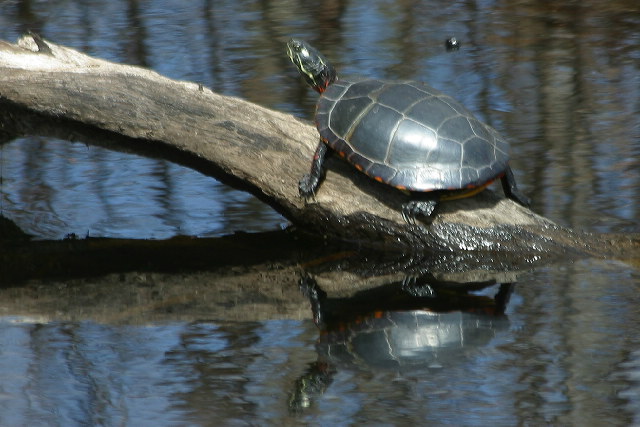
Painted Turtle (Chrysemys picta). Lots of them out today, along with other species. |
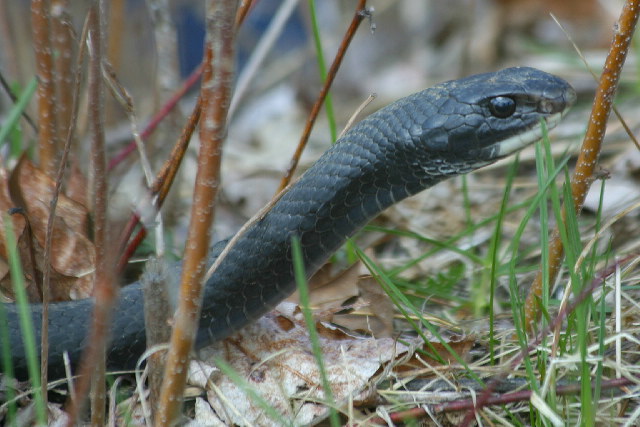
I last saw this Northern Black Racer (Coluber constrictor constrictor) on an unusually warm March 5th when the sun tempted it into activity. |
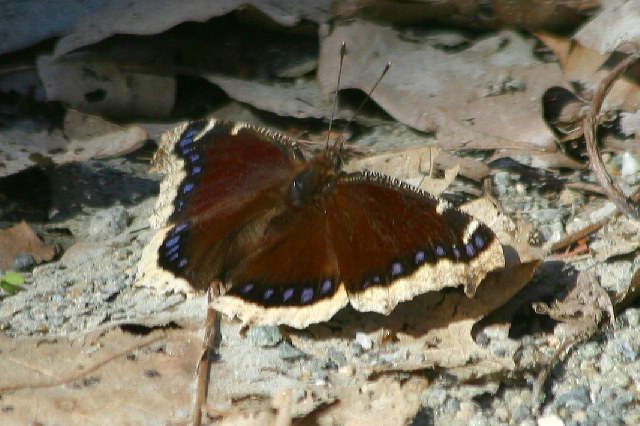
April 16th. Sunny and 70+ degrees brought out the Mourning Cloak butterflies (Nymphalis antiopa) to defend their territories. This one fluttered around my head repeatedly, apparently trying to scare me away. |
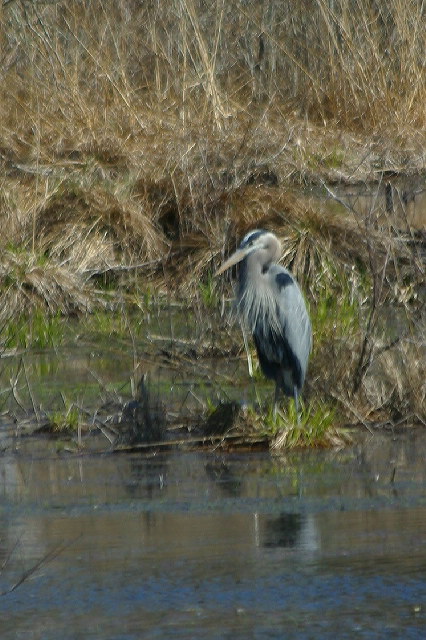
Great Blue Heron (Ardea herodius). |
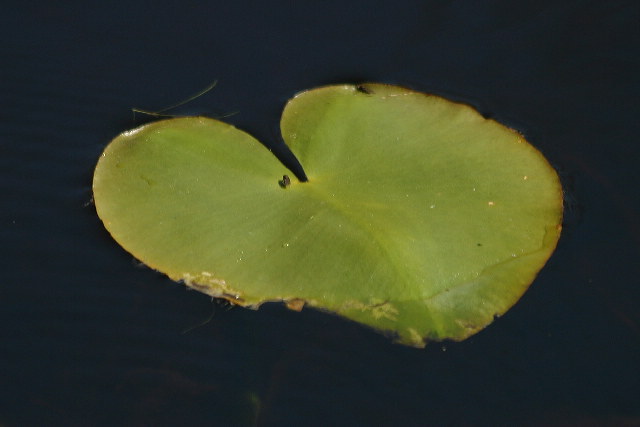
Lily pads are beginning to unfurl on the surface. |
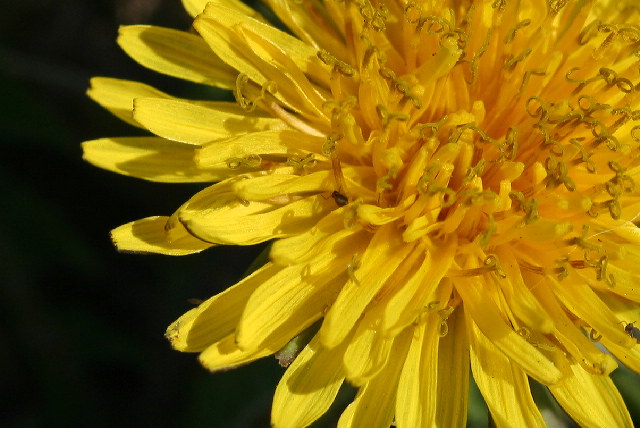
April 18th. Dandelion (Taraxicum officionalis). |
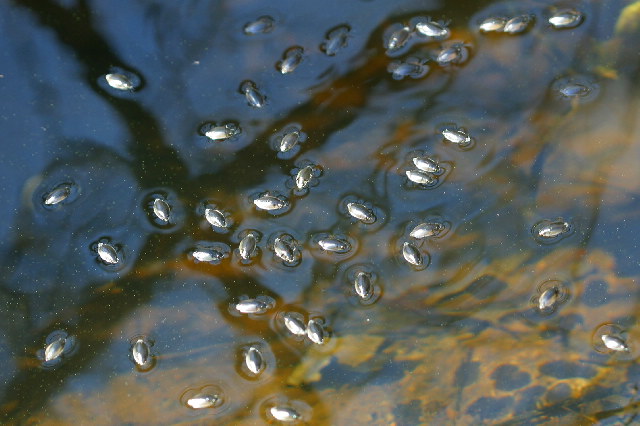
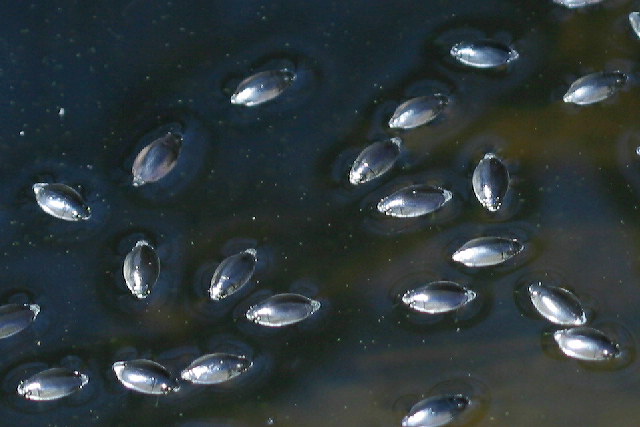
Whirligig Beetles (Family Gyrinidae). |
|
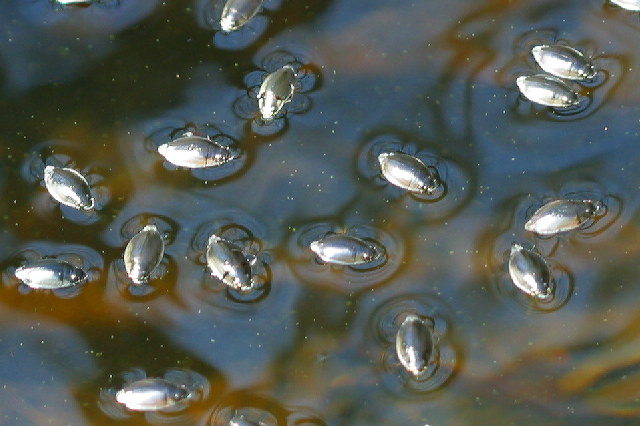
For this shot, I used a polarizing filter to cut reflections. |
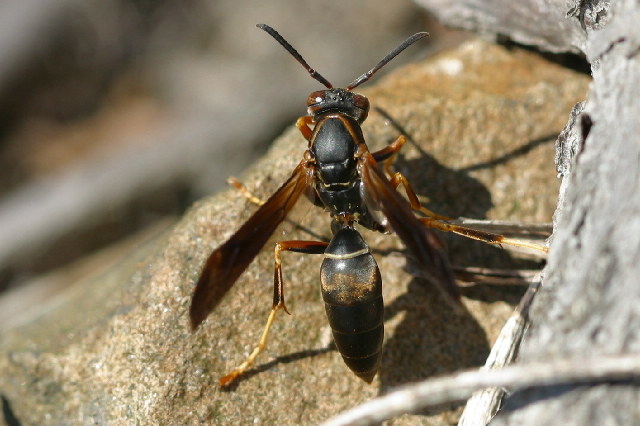
Female Paper Wasps (Polistes sp.) are setting up housekeeping. |
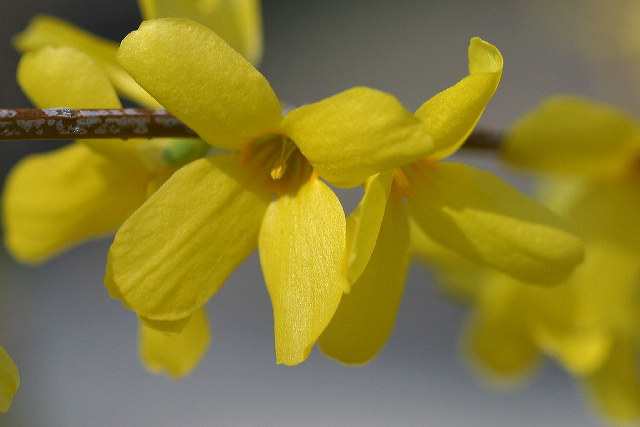
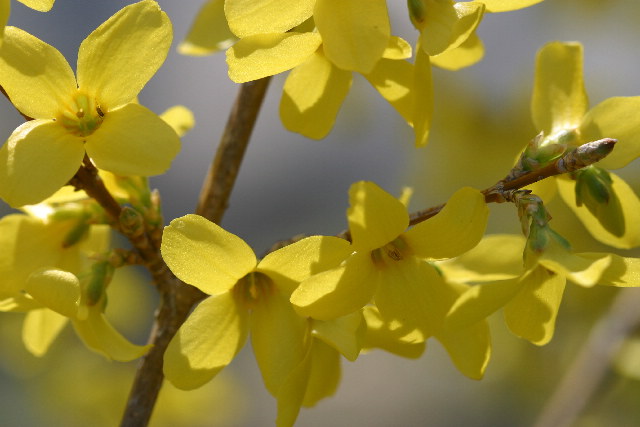
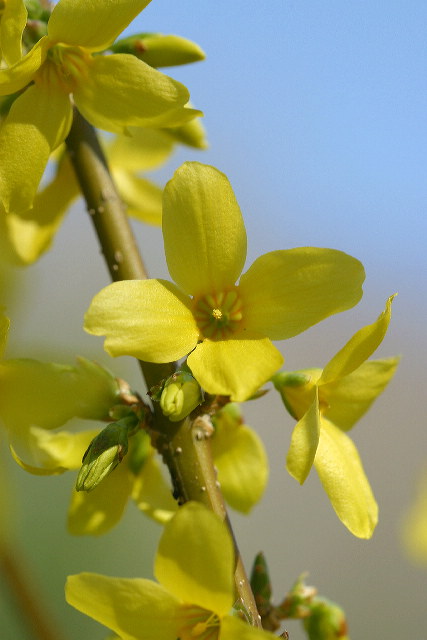
Forsythia planted at the Route 85 trailhead. |
|
|
April 19th. Five or six pairs of geese scattered across the marsh. |
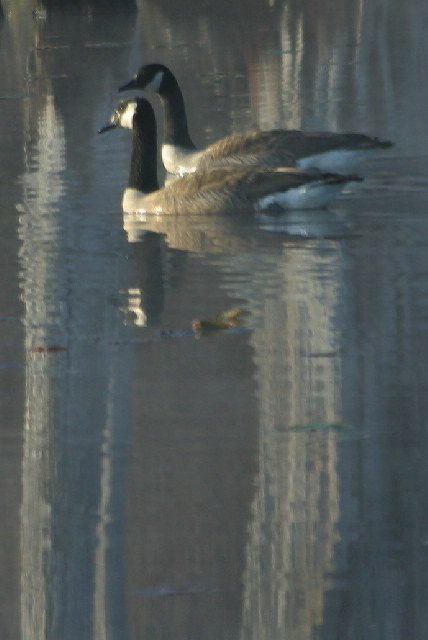
This group began moving towards another pair. |
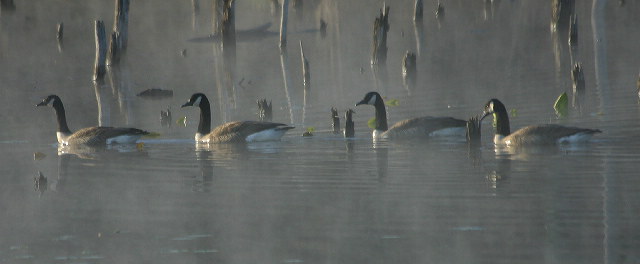
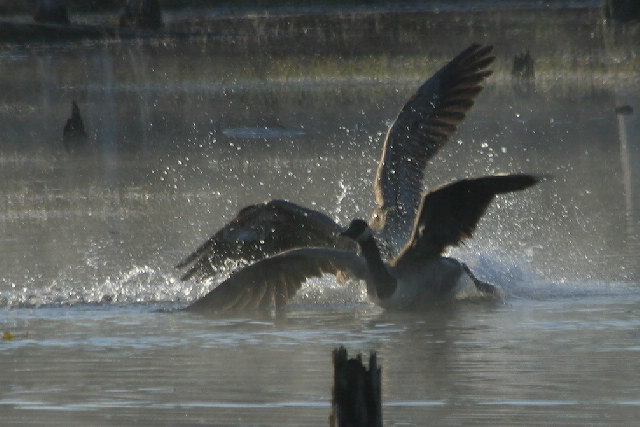
Massing for a confrontation. Most confrontations are verbal and postural... |
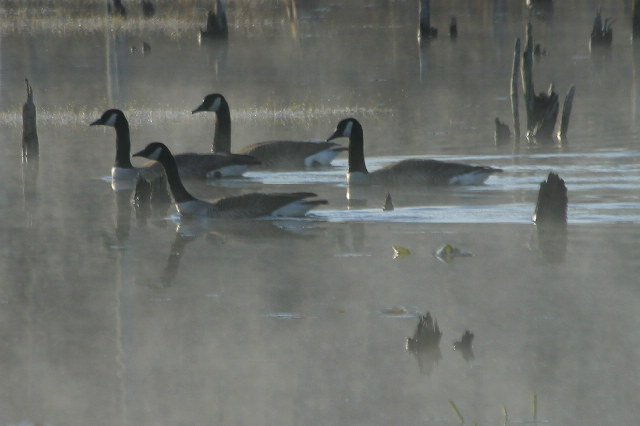
...but one of the other group attacked first. |
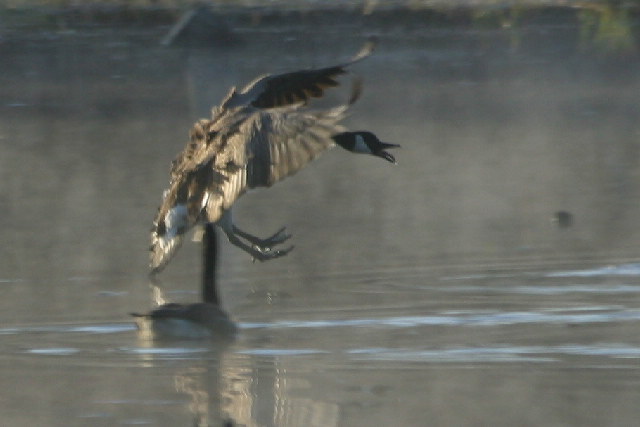
Attacks like this are usually brief, and peace resumes. All the birds flew off together a little while later. |
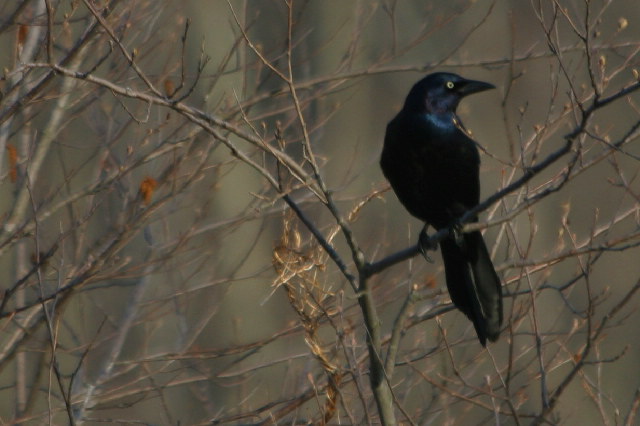
Grackles (Quiscalus quiscula) are nearly as common as blackbirds at the marsh. |
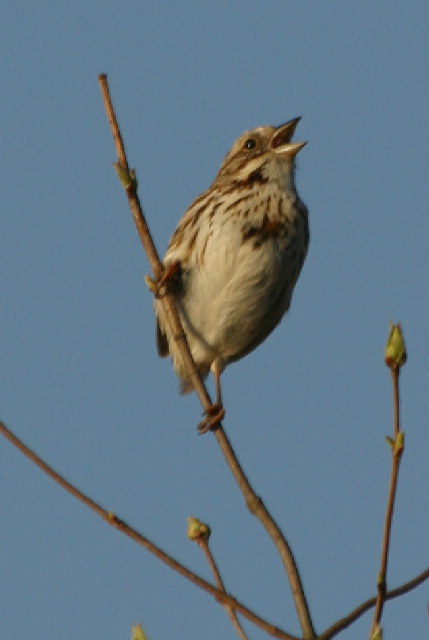
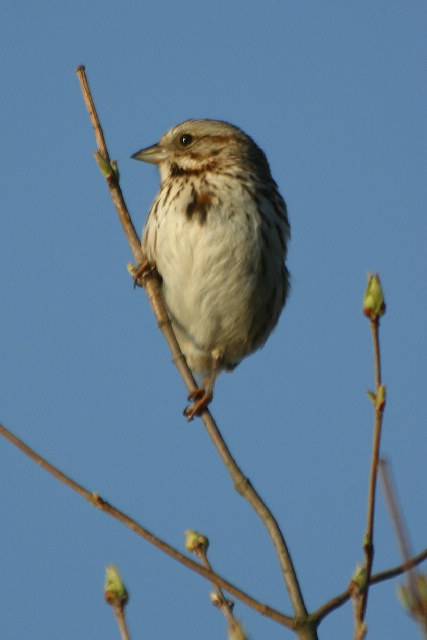
A Song Sparrow (Melospiza melodia). |
|
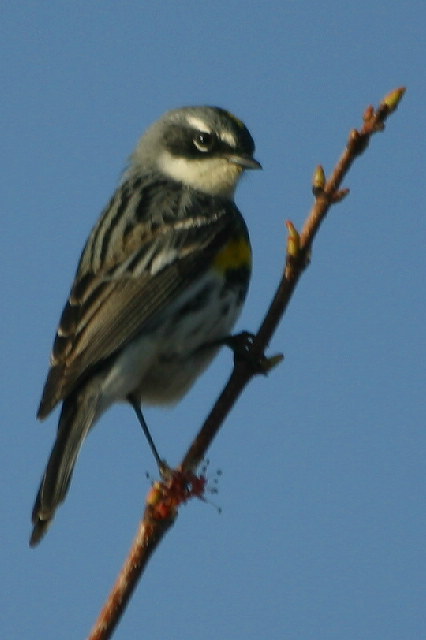
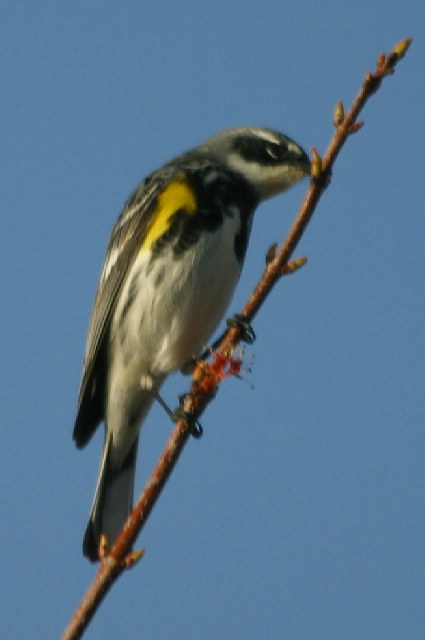
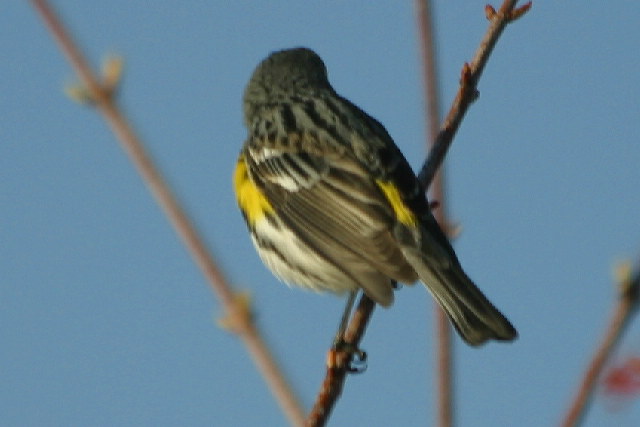
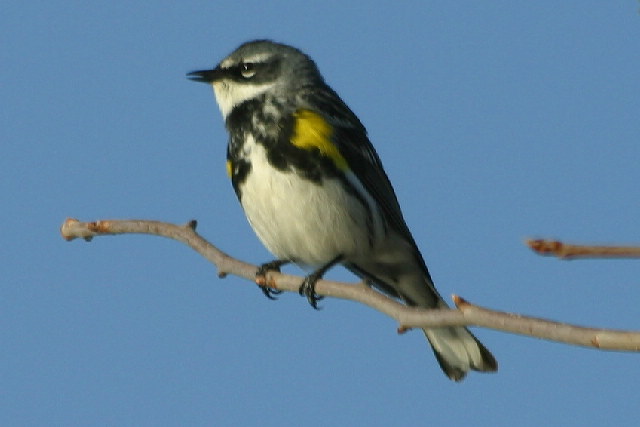
A Yellow-rumped "Myrtle" Warbler (Dendroica coronata). |
|
|

This view shows the characteristic yellow rump at the base of the tail. |
|
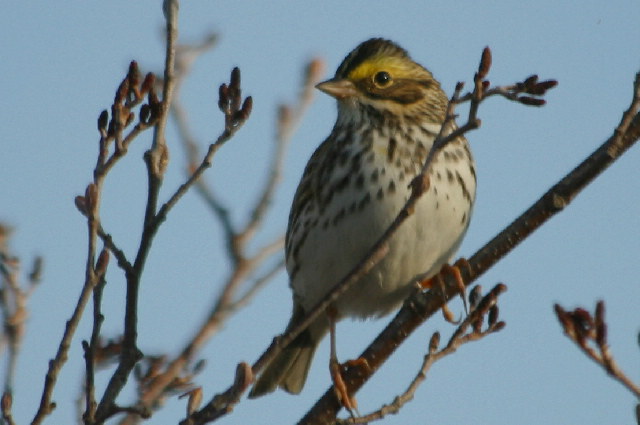
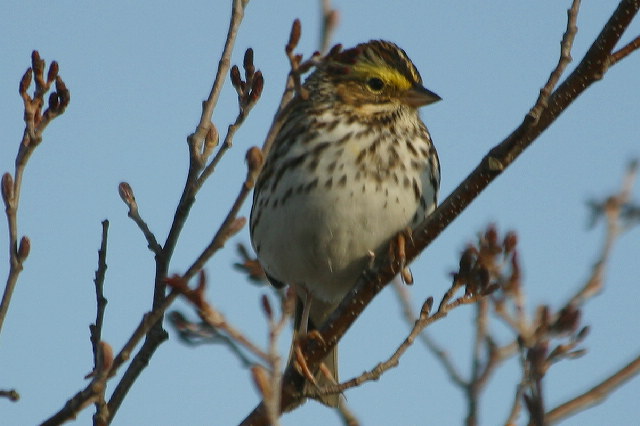
My best guess is a Savannah Sparrow (Passerculus sandwichensis). |
|
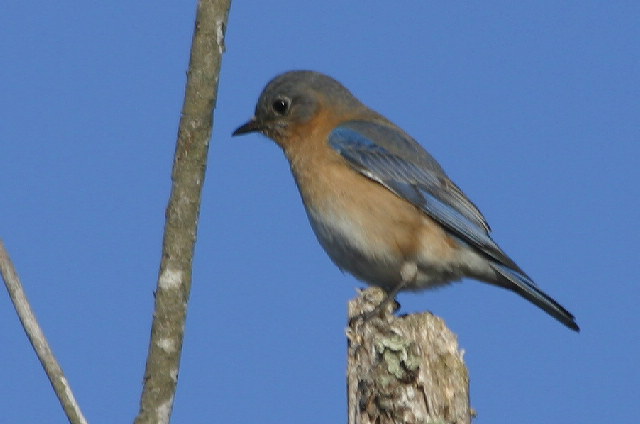
Bluebirds (Sialia sialis) never strayed far from the marsh throughout the winter. |